
 RECOGNISED WORLD OVER SOLUTIONS
 INNOVATIVE FOR SIMPLIFICATION
 Find out how BSC GLOBAL digitally transformed P2P cycle for worlds renowned brand in Automobile







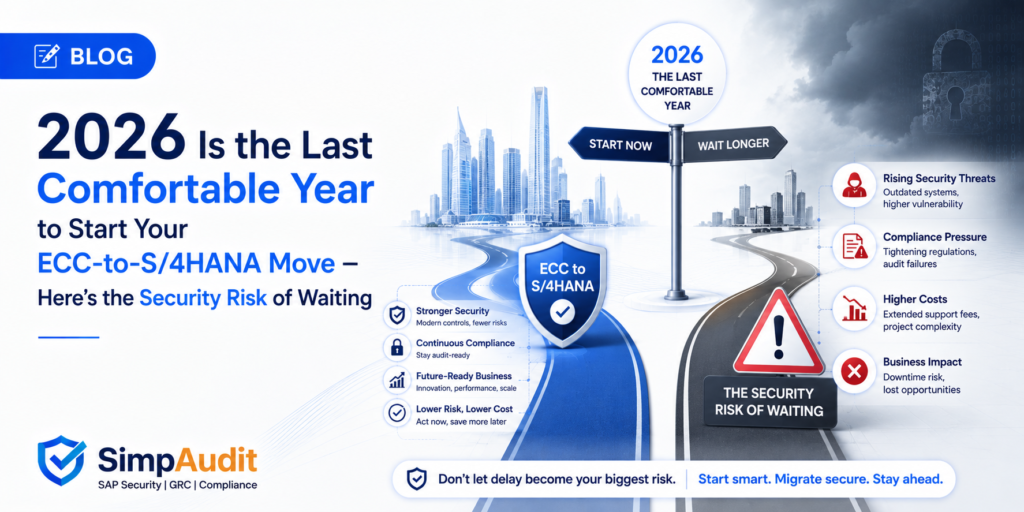
2026 Is the Last Comfortable Year to Start Your ECC-to-S/4HANA Move — Here’s the Security Risk of Waiting
The Deadline Everyone Knows, and Everyone Is Still Underestimating
SAP’s mainstream maintenance for ECC 6.0 ends December 31, 2027. Everyone running SAP has heard this by now. What fewer teams have internalized is the timeline math: a full ECC to S/4HANA migration typically spans 18 to 36 months for large enterprises, which means starting in 2026 is genuinely the last window that allows a controlled, well-planned move rather than a rushed one.
Consulting rates are already expected to spike 10 to 20% in the final pre-deadline year, and demand for S/4HANA talent could reach three times available supply by 2027. The organizations that wait aren’t just accepting security risk — they’re pricing themselves into a worse negotiating position.
What “Unsupported” Actually Means for Your Risk Profile
After 2027, systems still on ECC lose access to security patches, compliance updates, and official fixes — unless they pay for extended maintenance available only through 2030. That gap creates compounding exposure:
- Unpatched vulnerabilities become permanent, not temporary
- Compatibility issues with newer systems and integrations increase the risk of data errors flowing into financial reporting
- Auditors and regulators increasingly flag unsupported ERP platforms as a material control weakness, not a neutral IT decision
- Continuing to run unsupported software may put organizations at odds with regulatory frameworks requiring systems to remain current and secure
The Part Migration Roadmaps Usually Skip: Security During the Move
Migration projects tend to focus on data, process, and Clean Core architecture — and treat security and access governance as something to sort out after go-live. That’s backwards. A migration is exactly when SoD conflicts get introduced (new roles, temporary elevated access for the project team, parallel-run environments) and exactly when they’re hardest to catch manually.
Building continuous access monitoring into the migration itself — not bolting it on afterward — is what separates organizations that go live audit-ready from ones that spend the following year cleaning up access sprawl.
A Practical 2026 Starting Point
- Run a 3–6 week roadmap assessment now, before the late-2026 consultant rush begins
- Get real-time visibility into current ECC access risk before you carry it forward into S/4HANA
- Build SoD and access governance into the project plan from day one, not as a post-go-live cleanup
- Use the migration window to actually reduce your risk footprint, not just replicate it on new infrastructure
Migrate With Your Eyes Open
SimpAudit deploys inside SAP in under five days and gives migration teams real-time SoD and access risk visibility throughout the project — whether you’re still on ECC or already live on S/4HANA. Book a free demo and start your migration with a clean risk baseline.
Click Here To Know More: